Main Text
Précis
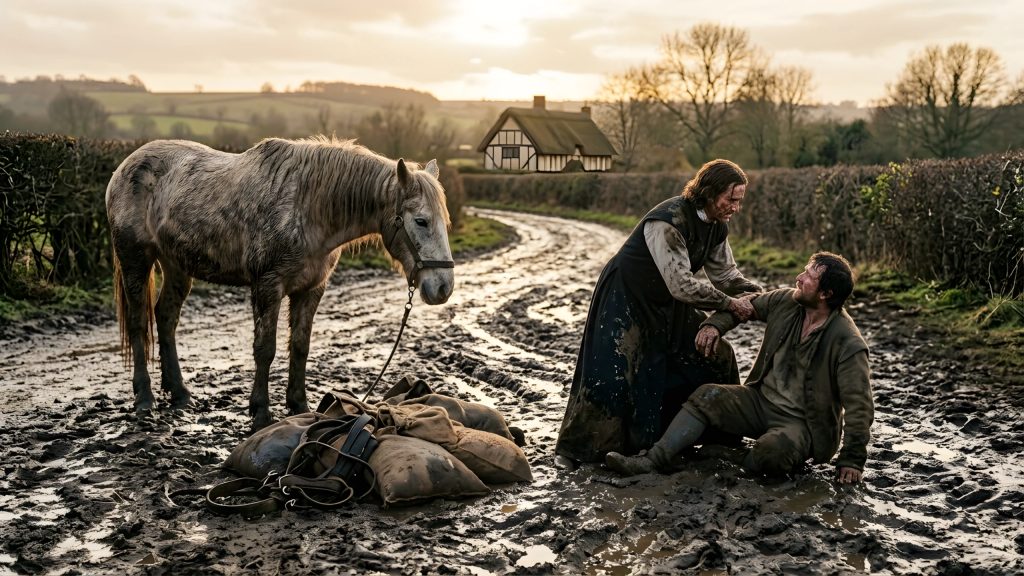
On a walk to Salisbury for an evening of music, country clergyman George Herbert stumbled across a pack horse that had shed its load and rider. He doffed his coat, helped the rider up, and gave him money towards a meal for himself and his horse. When he reached his destination, not looking his best, one of the company ventured that it had been unseemly for a gentleman to get into such a state. Herbert replied that he would have been uneasy in his conscience had he refused to be the answer to any man’s prayer, and begged the company to start making music.
In another walk to Salisbury, he saw a poor man with a poorer horse, that was fallen under his load: they were both in distress, and needed present help; which Mr Herbert perceiving, put off his canonical coat, and helped the poor man to unload, and after to load, his horse. The poor man blessed him for it, and he blessed the poor man; and was so like the Good Samaritan, that he gave him money to refresh both himself and his horse; and told him, “That if he loved himself he should be merciful to his beast.”
Thus he left the poor man: and at his coming to his musical friends at Salisbury, they began to wonder that Mr George Herbert, which used to be so trim and clean, came into that company so soiled and discomposed: but he told them the occasion.
And when one of the company told him “He had disparaged himself by so dirty an employment,” his answer was, “That the thought of what he had done would prove music to him at midnight; and that the omission of it would have upbraided and made discord in his conscience, whensoever he should pass by that place; for if I be bound to pray for all that be in distress, I am sure that I am bound, so far as it is in my power, to practise what I pray for. And though I do not wish for the like occasion every day, yet let me tell you, I would not willingly pass one day of my life without comforting a sad soul, or shewing mercy; and I praise God for this occasion. And now let’s tune our instruments.”